You've just arrived at the park, battery charged, camera ready, a perfect scene laid out in front of you. Then the wind shifts, a heavy cloud appears out of nowhere, and in less than five minutes you're scrambling to pack up your gear before the rain ruins everything. If that's happened to you, welcome to the club. Flying a drone without checking the weather forecast is basically just hoping you get lucky — and luck, as every pilot learns early on, is not a reliable strategy.
September has a sneaky quality to it in Brazil. Temperatures climb, the weather turns unpredictable, and a clear blue morning can flip into an afternoon thunderstorm within hours, especially in the South and Southeast regions. It's no coincidence that "weather forecast" is one of the most searched terms right now: spring's arrival shuffles the climate patterns and fills any outdoor trip or shoot with surprises. For drone pilots, understanding the weather isn't a minor detail — it's a core part of planning.
Why Weather Makes Such a Big Difference for Drones
A drone isn't a car you can pull over when the rain picks up. When conditions change in the air, your equipment is already up there, and you have seconds to make decisions. Strong wind causes the drone to drift, drains the battery far faster than normal, and can simply knock down a lighter model. Rain, beyond soaking the electronics (most consumer drones have no water resistance), compromises the camera's image quality and can short-circuit the motors.
Then there's the temperature problem. On very hot days — above 95°F (35°C) — lithium batteries, which are used in nearly every drone on the market, lose efficiency. The drone reads 30% battery remaining, but when it's really hot, that percentage drops faster than you'd expect. Extreme cold has a similar effect: the battery loses capacity and flight time shrinks. In other words, weather isn't just about "will it rain or not." It's about knowing what conditions your equipment will actually be operating in.
The Numbers You Need to Check Before You Take Off
Checking for rain isn't enough. There are four variables every drone pilot should verify before leaving the house, and all of them show up in modern weather apps.
Wind Speed
This is the factor that literally brings drones down most often. The practical benchmark is straightforward: entry-level drones (models under a certain price point, like many in the DJI Mini line) typically handle winds up to about 18–22 mph (30–35 km/h). Above that, stability drops significantly. Mid-range and professional drones can handle more, but even they struggle with gusts above 30 mph (50 km/h). When an app shows wind above 15 mph (25 km/h), it's worth thinking twice.
One detail a lot of people overlook: surface wind and wind at altitude are different. It might feel calm where you're standing, but up at 150 or 300 feet, the air could be moving much faster. Apps like Windy (free, available for Android and iPhone) display wind at different altitudes — a genuinely valuable feature for anyone who takes their flying seriously.
Humidity and Chance of Rain
Humidity above 90% is a warning sign. It doesn't mean it'll rain immediately, but excess moisture in the air can condense on the camera lens, fog your image, and in extreme cases, form droplets on the electronics. A rain probability above 40% for your planned flight window is reason enough to reschedule. It's not worth the risk.
Cloud Cover
For video and photography, this matters aesthetically too: a sky packed with low clouds produces flat, contrast-free lighting. But beyond the visual issue, very low clouds can mean reduced visibility, which makes controlling the drone at distance more difficult. Aviation regulations require you to maintain a direct line of sight with your aircraft at all times. If a cloud swallows your drone, you're already out of compliance.
Temperature
We already touched on battery performance. But there's another angle: intense heat causes the drone itself to run hotter. The motors work harder on warm days, and if the aircraft doesn't have efficient heat dissipation, it can hit its thermal safety threshold earlier than expected and trigger an automatic shutdown. Check the operating temperature range for your specific model (it's in the manual or on the manufacturer's website) and respect those limits.
The Best Apps to Check Before You Fly
The default weather app on your phone — the one sitting on your home screen — is fine for deciding whether to grab an umbrella. For drone flying, you need something more detailed. The good news is that there are excellent free options out there.
- Windy: shows wind at different altitudes, animated rain fronts in motion, and real-time cloud cover. The animated map interface is intuitive and easy to read. It's the go-to app for experienced pilots.
- UAV Forecast: built specifically for drone pilots. You enter your aircraft model and the app gives you a straight answer: "Good to fly," "Use caution," or "Do not fly." It also flags airspace restrictions in your area.
- Meteoblue: great for detailed 3–7 day forecasts broken down hour by hour. Ideal for planning your week and picking the best window.
- REDEMET (Brazil's Air Force Meteorology Network): for those who want official data. The site and app are more technical, but they provide reliable wind and cloud ceiling information by region.
A practical tip: check two different apps before you fly. Not because one is better than the other, but because a disagreement between forecasts is itself a signal of instability. When both apps agree the weather will hold, you can trust that call more confidently.
How to Plan the Right Time to Fly
There's a golden window that most experienced pilots know well: early morning, between 6 and 9 a.m. During that stretch, the sun hasn't heated the ground enough to create convective currents — those pockets of warm air rising quickly that cause turbulence even on days that seem completely calm. The air tends to be more stable, wind is lighter, and for photographers, the lighting has that warm golden tone that makes any scene look better.
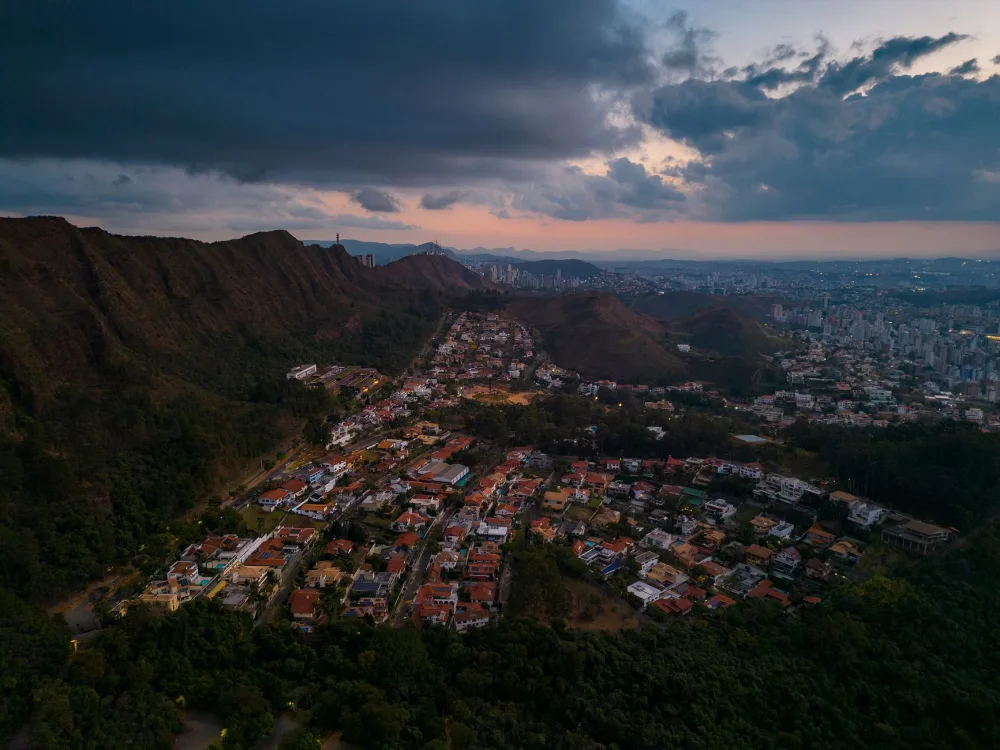
Late afternoon, between 5 and 7 p.m., has similar qualities, but with an added risk: in September, especially in cities like São Paulo, Joinville, and Belo Horizonte, afternoons carry a high probability of rapid storm development. The heat built up through the day meets afternoon humidity and the sky can close in with startling speed. It can look perfectly calm at 5 p.m. and be pouring by 6. Keep a close eye on the hour-by-hour forecast.
Midday — between 11 a.m. and 3 p.m. — is usually the worst window on hot days. Thermal winds (caused by the ground heating up), batteries that drain faster in the heat, and a higher probability of instability all converge. On top of that, direct overhead sunlight creates harsh shadows in your footage, what photographers unfondly call "noon light."
Signs That You Should Land Immediately
Good planning reduces risk, but weather can shift during a flight. Knowing when to land is just as important as knowing when to take off. Watch for these signs:
- The drone starts drifting to one side even with the controls in a neutral position. This means the wind at altitude is stronger than expected.
- Your flight app shows battery draining rapidly for no obvious reason — the drone is fighting the wind.
- The sky starts shifting quickly to dark gray in any direction.
- You hear thunder, even if it sounds far away. Electrical storms move fast, and lightning doesn't give warnings.
- The camera feed starts shaking heavily, indicating gusts.
- Humidity rises noticeably — you feel that heavy, damp air that comes just before rain.
In any of these cases, land immediately. Don't try "one more pass" or "just one more shot." Equipment can be repaired or replaced; a drone accident can't always be undone.
A Quick Pre-Flight Checklist for Flight Day
Before loading the drone into the car, take five minutes to run through this sequence. It might feel like unnecessary overhead at first, but it quickly becomes habit and saves a lot of headaches down the line.
- Check two weather apps and review wind, rain, and temperature hour by hour for the period you plan to fly.
- Verify whether there are any airspace restrictions at your location (DroneIQ and the DJI app itself handle this automatically).
- Check your battery charge levels and always bring a spare, especially on hot days.
- Watch the sky for 15 minutes before you take off — a dark cloud building on the horizon is already a reason to wait.
- Decide before you take off what your landing trigger will be. When you've set the criteria in advance, you won't be tempted to push it "just a little longer" at the wrong moment.
Flying a drone is one of the most satisfying experiences that modern technology has made accessible to everyday people. That aerial perspective — the view that used to be exclusive to helicopters and airplanes — now fits in a backpack. But that freedom comes with a cost: it demands awareness of your environment, and especially of the weather. Check the forecast, pick the right window, and land without hesitation when conditions change. Do that consistently, and your flights will last much longer — both in the air and in the lifespan of your gear.