You bought a drone, you're pumped to fly it this weekend, and before you even power it on, a neighbor is already giving you the stink eye from their window. Or worse: the building manager texts you asking if you have permission for that. Relax. The situation is simpler than it sounds, but it does require some real care. Flying a drone at a condo or near residential areas involves rules from ANAC (Brazil's National Civil Aviation Agency, which regulates everything that flies in the country), privacy considerations, and, of course, good old-fashioned neighborly coexistence. Let's get into what actually matters.
What ANAC Says About Drones (No Legalese)
ANAC classifies drones into three categories, essentially based on weight. If your device weighs less than 250 grams — like the popular DJI Mini 4 Pro — you'll face far less red tape. Above that threshold, the requirements go up. For drones between 250 g and 25 kg flying in urban areas, you need to, at minimum, register your equipment in the SISANT system, which is Brazil's national registry for unmanned aircraft. The process is online, free, and takes less than 15 minutes.
On top of registration, there are rules about where and how you can fly. The big one: don't fly higher than 120 meters in urban areas without special authorization. You're also prohibited from flying within 30 horizontal meters of people who aren't part of the activity, over crowds (concerts, games, protests), or near airports without prior clearance from DECEA, which controls Brazilian airspace. The AirMap app — or your DJI app itself — will show you these restricted zones on a map before you ever take off.
Is Flying Inside a Condo Allowed?
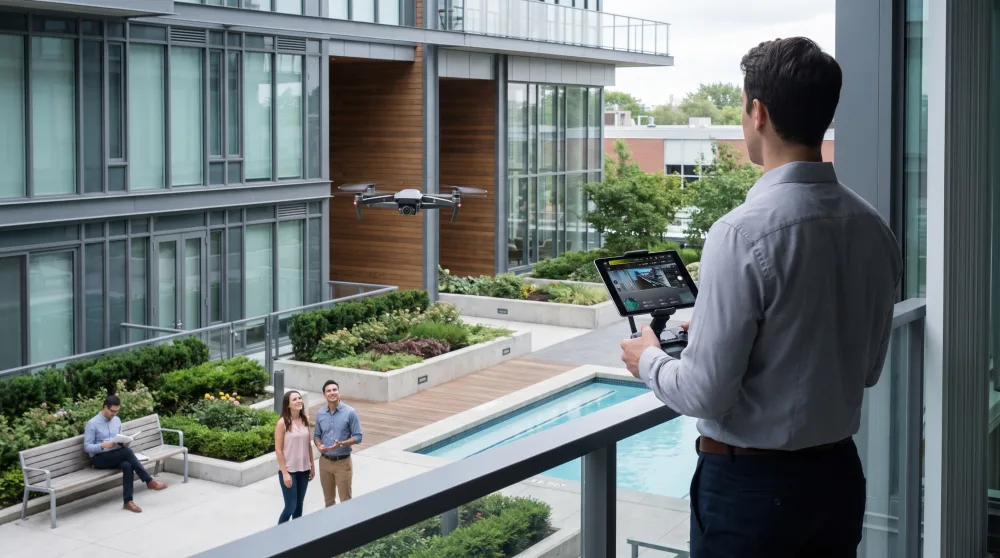
This is the question that causes the most confusion. The short answer: it depends. From a civil aviation standpoint, flying inside a gated condo isn't automatically prohibited, as long as you follow the ANAC rules outlined above. The catch is that a condo is private property with its own internal rules. If the condo's bylaws or internal regulations ban drones in common areas, that rule stands and you need to follow it.
Before any flight, one simple step goes a long way: check with management. It takes five minutes, prevents headaches, and most of the time the answer is yes once you explain what you're doing (filming your unit to list it, capturing a party, testing your gear). What usually causes problems is the neighbor who just fires up their drone without telling anyone and starts buzzing past other people's windows. That's not just rude — it can be treated as a privacy violation, which the law takes seriously.
Privacy: The Line You Can't Cross
Brazil has the Marco Civil da Internet and the LGPD (General Data Protection Law), both of which protect people's privacy — including in physical spaces. Filming a neighbor's balcony, the pool where kids are playing, or the inside of someone's apartment without permission can lead to a lawsuit. That's not an exaggeration. There are documented cases in Brazil of people being sued by neighbors after flights were deemed invasive.
The practical rule is simple: if you wouldn't film it with a handheld camera, don't film it with a drone. If you'd feel awkward pointing a camera at the window of the apartment above you, your drone shouldn't be hovering there either. This holds even if the airspace is technically unrestricted. It's not just a legal issue — it's common sense. A camera-equipped drone is a powerful piece of equipment, and being able to film something doesn't mean you should film everything.
One important detail: if you film identifiable people — faces, for example — even in open areas, you need their consent to use that footage publicly. Posting an aerial video of a condo party on Instagram with people's faces visible might seem harmless, but technically it requires everyone filmed to agree to being shared.
How to Avoid Trouble with Your Neighbors (and the Building Manager)
Having the law on your side is great, but it won't resolve a condo dispute. Anyone who's lived in an apartment building knows that neighbor conflicts are exhausting and can drag on for months. A few simple steps can keep things smooth:
- Give people a heads-up before you fly. A quick message in the building's group chat saying "I'm going to do a short flight tomorrow morning in the outdoor area" will defuse most objections before they start.
- Pick a considerate time. Saturday morning when everyone's sleeping isn't ideal. Try a weekday late afternoon, or coordinate a time with management.
- Keep your drone in sight. Flying far away or so high you can no longer see the drone is not only dangerous — it also looks like you're up to something suspicious.
- Don't fly over windows and balconies. Even if you're just passing overhead, avoid it. The noise of a drone near an open window is annoying, and it invades the resident's visual privacy.
- Keep your insurance current. For drones over 250 g used in urban areas, liability insurance is required by law. It covers damage to third parties in case of a crash or accident. It's not expensive and can save you a world of trouble.
Most of these aren't legal requirements in most cases, but they make all the difference in practice. A well-informed building manager and neighbors who know what's going on can turn a potential conflict into friendly curiosity. I've seen it happen: someone shows up with a drone, posts in the group chat, and three neighbors come down wanting to get a closer look.
When You Need Formal Authorization
For most recreational flights at residential condos, you don't need to request formal authorization from any government agency, as long as you follow ANAC's rules. But there are situations where authorization is mandatory:
- Flying near airports, helipads, or flight routes (the ANAC app or AirMap will flag these areas).
- Flying at night (after sunset) with drones over 250 g.
- Flying at events with large crowds.
- Using the drone for commercial purposes (filming properties for sale, news coverage, paid services).
- Flying in national parks or environmentally protected areas.
For commercial use, in addition to SISANT registration, you'll need an RPAS pilot certificate (RPAS stands for Remotely Piloted Aircraft System, which is the technical term for a drone). There are specific courses available for this — some online and reasonably priced. If you're thinking about using your drone for work, it's worth the investment.
My Drone Is Tiny. Do I Still Need to Register It?
If it weighs less than 250 grams and you're flying in an open area, away from airports, and for non-commercial purposes, you don't need to register it or carry mandatory insurance. But heads up: "non-commercial" means you're not receiving anything in return — no money, no product, no paid promotion. Posting videos on YouTube with monetization turned on may already be considered commercial use.
Can I Be Fined for Flying in a Condo Without Internal Authorization?
Fined by the condo? Yes — if the internal rules prohibit drones and you fly after being warned. Fined by ANAC? Only if you break federal aviation rules (altitude limits, restricted zones, registration). The two are independent. You could be fully compliant with ANAC and still get a warning from the building manager for violating the condo's bylaws.
What to Do Before Your Next Flight
If you haven't registered in SISANT yet and your drone weighs more than 250 g, that's your first step. Go to the ANAC website, click on SISANT, register your equipment, and download the digital certificate. Save it on your phone. Then, open your drone's app or AirMap and check whether the area where you want to fly has any restrictions. If it does, there's a process to request temporary authorization — which in most cases is approved within a few hours for simple recreational flights.
As for the condo itself, a quick message to the building manager or the residents' group chat takes care of 90% of situations. Explain what you're planning to do, how long it'll take, and that you'll respect everyone's privacy. Most people will be curious, not upset. The problem is almost always a lack of communication — not the drone itself.
Flying a drone is an incredible experience, and Brazil has landscapes that look even more stunning from above. With your paperwork in order, a bit of common sense, and open communication with the people around you, the chances of running into trouble are slim. The sky — within the rules — is yours.