You listed your apartment for sale, took photos with your phone, nailed the lighting, and the images still came out... average. You know that feeling where the place looks smaller than it actually is? Or where the stunning view from the 15th floor just doesn't come through in the photos? That's exactly where a drone comes in. A single well-executed aerial shot can show the building's surroundings, how close it is to parks, the sunset that hits the balcony every evening, and details that no photo taken from inside the apartment can ever capture. In practice, that makes buyers want to schedule a visit before they even finish reading the listing.
The real estate market is more competitive than ever. Anyone who lists on sites like Zillow or Realtor.com knows: buyers scroll fast. If the first image doesn't stop them mid-scroll, it's over. Aerial drone photos have become a genuine competitive advantage, not just decoration. But there's a huge difference between using a drone the right way and just throwing it in the air and hoping something beautiful comes out. This article is here to help you understand what actually works.
Why do drones work so well for real estate?
The answer is simple: context. A photo taken inside the apartment shows the living room. An aerial photo shows the living room, the building, the street, the neighborhood, and the city in the background. The buyer instantly understands where the property sits in the world. That reduces anxiety for buyers who aren't familiar with the neighborhood and builds confidence in their decision.
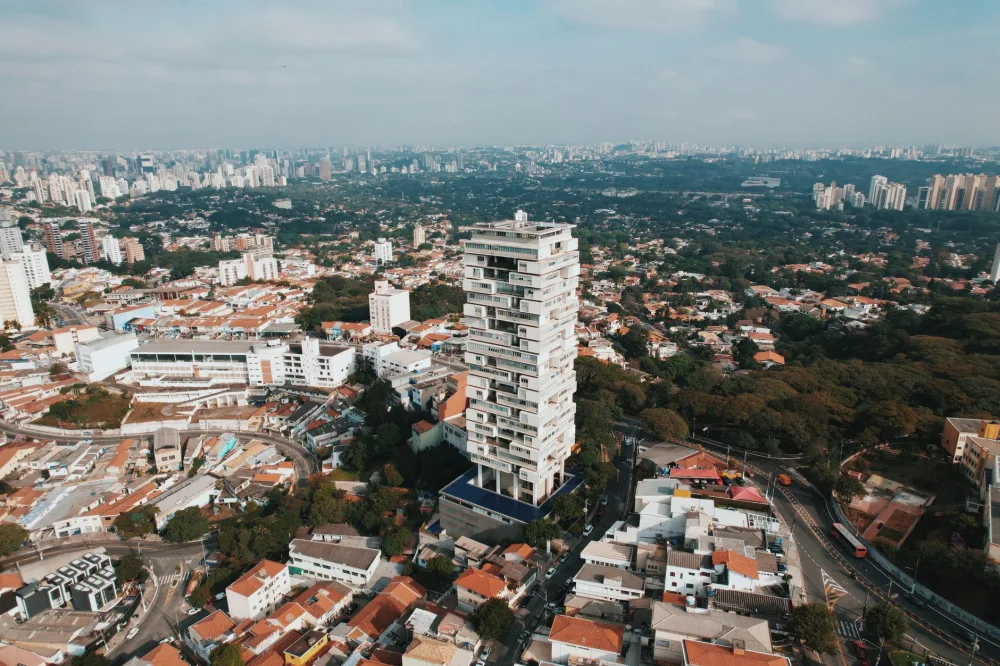
Think about it this way: you're buying an apartment in a neighborhood you don't know that well. An aerial photo showing the building next to a tree-lined park, with a subway station visible two blocks away, is worth more than an entire paragraph of description in the listing. The human eye believes what it sees. And a drone delivers exactly that visual proof buyers are looking for before they take the next step.
Another thing to consider: high-floor apartments with great views are usually listed with photos taken from inside, looking out the window. The problem is that a phone camera can't balance the indoor lighting with the brightness coming through the window. You end up with either a dark interior or a blown-out, overexposed window. A drone hovering outside at the same level as the balcony, or slightly above, solves that naturally.
Before you fly: what you need to know about the rules
Here's the part most people skip over — and they really shouldn't. In the United States, drone use is regulated by the FAA (Federal Aviation Administration). This isn't pointless red tape: a poorly piloted drone can fall on people, collide with buildings, or interfere with aircraft. The rules exist for serious reasons.
The basics you need to know:
- Drones weighing more than 0.55 pounds (250 grams) must be registered with the FAA. Registration is done online and costs a small fee.
- Flying in urban areas requires extra caution. Near airports and in controlled airspace, you need prior authorization through the LAANC system (Low Altitude Authorization and Notification Capability), which is free and usually instant.
- Commercial drone use — including real estate photography — requires an FAA Part 107 certification. If you're hiring a photographer, make sure they're Part 107 certified.
- Flying over crowds of people without a waiver is prohibited. If there's an event going on below, wait or reschedule the flight.
If you're hiring a professional photographer for the job, ask directly whether they hold a Part 107 certification and whether they'll request airspace authorization when required. A serious professional won't hesitate to answer.
What to shoot: the angles that actually sell the property
Having a drone isn't enough on its own. What makes the difference is knowing what to capture. The logic here is the same as any good photography: you're telling a story. In the case of an apartment for sale, the story is "look how great it is to live here."
The building facade with its surroundings
Start with a wide shot that shows the entire building in the context of the neighborhood. Tree-lined sidewalks, a nearby park, well-kept streets — all of that shows up and adds value. Fly at a 45-degree angle relative to the building rather than straight on. That adds depth and makes the image far more interesting than a flat, head-on shot.
The view from the balcony or windows
Position the drone at the same height as the balcony of the unit being sold and point the camera toward the horizon. The buyer will see exactly what they'd see every morning over coffee. If the view is the property's strongest selling point, this is the most important shot of the entire shoot. Try a few variations: one looking straight ahead, one tilted slightly downward to show the street below, and one looking upward to show the floors above (works especially well for penthouse units).
An overhead aerial of the surroundings
Fly the drone up to about 200 to 260 feet and take a straight-down shot with the building centered in the frame. You can see the entire block, surrounding streets, parks, and nearby shopping. This image works great at the beginning of a listing as a general overview of the location.
The orbit video
If you go beyond photos and shoot video, the orbit move is the most visually impressive and the most widely used in real estate. The drone circles around the building while keeping it centered in the frame the whole time. It's that cinematic effect you've seen in new development ads. Most modern drones do this automatically with a mode called "Point of Interest" or "Orbit."
Timing and light: the secret nobody talks about
You can have the best drone on the market and hire the most experienced photographer, but if you fly at the wrong time of day, the photos will disappoint. Natural light is the most important ingredient in any image, and with aerial photography, that effect is amplified.
The ideal time is what photographers call the "golden hour": the 40 to 60 minutes after sunrise or before sunset. The light turns soft and orange and comes in at a low angle, creating beautiful shadows that give the building and neighborhood a sense of depth and dimension. It's visually far richer than midday light, which is harsh, comes straight down, and flattens everything out.
For apartments that get morning sun, fly early. For units with afternoon sun and a west-facing balcony, sunset is the perfect moment. Talk with your photographer about where the sun will be in relation to the building before locking in a time. Free apps like Sun Surveyor and PhotoPills show you exactly where the sun will rise and set on any given day at any location. They're absolutely worth using.
Overcast days with thick clouds kill the shadows and leave images looking flat and lifeless. But a partly cloudy day with scattered clouds against a blue sky looks stunning — the clouds add a cinematic backdrop. Avoid fully overcast or rainy days.
Common mistakes that make the drone useless
A lot of people invest in a drone or hire a photographer and still end up with underwhelming results. Almost every time, the reason is one of these:
- Flying too high: the building becomes a tiny dot in the frame and loses all presence. For real estate, an altitude between 100 and 260 feet tends to work best in most situations.
- Not cleaning the lens: it sounds obvious, but the drone's lens collects dust and smudges. An aerial photo with a dirty lens looks like it was shot through a foggy window.
- Ignoring power lines: in older neighborhoods, electrical wires and cables cut across the frame and are incredibly distracting. Plan your angle to avoid them, or ask the editor to remove them in post-production.
- Skipping editing entirely: every professional photo goes through basic editing — brightness, contrast, saturation. The raw drone footage already looks good, but edited it looks excellent.
- Using only aerial shots: the drone complements interior photos — it doesn't replace them. The listing still needs great shots of the rooms, the kitchen, the bathroom. The drone rounds out the package with the exterior view and location context.
Is it worth hiring someone or buying your own drone?
If you're only selling one property and have no other use for a drone, hire a professional. A complete real estate drone photography session typically costs between $150 and $400 depending on the market and scope of work. Relative to the value of an apartment, that's a small investment with a high return: properties with aerial photos tend to generate more inquiries and sell faster, according to agents who use this approach regularly.
Now, if you're a real estate agent, a photographer, or you work with short-term rentals (like Airbnb), it makes sense to own your own equipment. The DJI Mini 4 Pro, for example, is a compact, lightweight drone (under 249 grams, which significantly simplifies the regulatory side of things), with an excellent camera, and retails for around $760. For anyone who uses it frequently, the cost pays for itself after just a handful of shoots.
The bottom line is simple: a well-executed aerial photo isn't a luxury reserved for high-end new developments. It's an accessible tool that anyone selling a property can use to stand out in a crowded listing market. Before you publish your next listing, ask yourself whether the photos you have truly show the best of what that property has to offer. If the answer is "I'm not sure," the drone is probably the missing piece.